
CTV is no longer just a branding channel. It is becoming one of the most powerful performance levers in modern media. As streaming becomes the default way audiences watch TV, advertisers are rethinking how premium video fits into their performance marketing mix. But CTV alone is not enough. To win, marketers need a video everywhere view across streaming, AVOD, live sports, and social video. Addressability, faster optimization, and measurable outcomes are turning premium video into a full-funnel engine that builds awareness and drives action.
ON-DEMAND WEBINAR
State of the Industry: Video Everywhere—Winning in the New Era of CTV
HOSTED BY
Karisa Schroeder
Director, Product Marketing
Karisa is the Director of Product Marketing at MediaRadar, where she leads go-to-market strategies to launch and scale new products and solutions. With expertise in marketing intelligence, data marketplaces, DaaS, and AI-powered insights, she helps brands and agencies deliver connected customer experiences, focusing on creative, competitive, and sports advertising intelligence to drive measurable growth.
PRESENTED BY
Jay Nielsen
VP, Brands and Agencies
Jay is the VP, Product at MediaRadar, where he draws on extensive experience in product management, retail media, and B2B SaaS. He has led global teams at Criteo and Nielsen, building innovative solutions that streamline media buying and help brands and agencies drive measurable results.
PRESENTED BY
Gray Wheatley
Product Manager, Sports
Gray Wheatley is the Product Manager for Sports at MediaRadar, where he focuses on building products that connect and contextualize sports-related marketing intelligence. With over 15 years of experience across the sports industry, he helps rights holders, brands, and agencies use data to optimize performance and maximize asset value.


Webinar Q&A
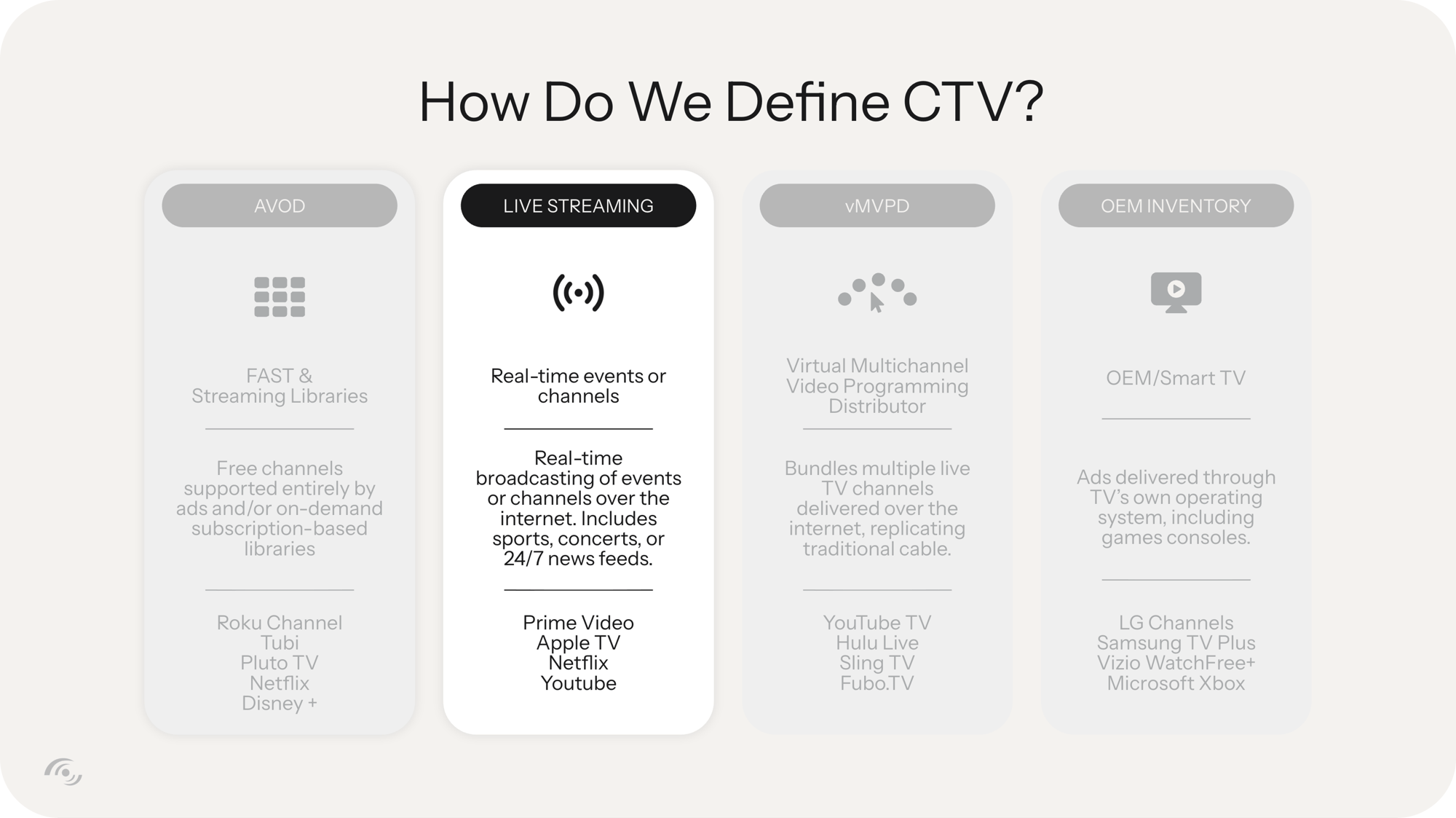
Do you consider CTV to be defined based on the device or the content? For example, do you consider someone streaming Hulu on a mobile device to be CTV?
MediaRadar defines CTV primarily by the device/environment, not just the app or content. In Jay Nielsen’s words, their CTV definition is centered on the “TV glass”—internet-delivered video viewed on a connected television. So Hulu watched on a mobile phone would not be classified as CTV in their framework; that would be treated under digital/mobile. Hulu on a connected TV would count as CTV.
Will MediaRadar’s CTV data be available at the DMA level?
Yes, our upcoming May enhancement will include DMA-level data and allow users to cut the data by market/geography.
Do you have any insight into the share/manner in which this is being purchased? DSPs? PMPs? PMPs executed through DSPs? Publisher Direct?
While we don’t have visibility into the exact buying mechanisms today (e.g., DSP vs. PMP vs. publisher direct), we can share directional insights. Most CTV activity in this space is typically executed programmatically, often through DSPs, with a mix of open exchange and private marketplace (PMP) deals. That said, without direct access to transaction-level data, we can’t definitively break out the share by buying method for these specific campaigns.
Where would the Spectrum TV App fit into this ecosystem?
The Spectrum TV app would fit under the virtual MVPD / app-based distributor bucket in MediaRadar’s framework. Even though Spectrum and Xfinity also have traditional hardwired services, their apps would still fall into that general area of coverage for MediaRadar.
Any insights on the Performance metrics for Tequila Anywhere and Nonna? How much product did the CTV campaign move off the shelves?
While we don’t directly measure campaign performance metrics like sales lift or product movement, we can speak to the scale and placement of CTV activity for brands like Tequila Anywhere and Nonna. Our data helps show where and how often these brands are advertising, which can be a strong indicator of investment and strategy——and many of our customers use our data in their data lakes, where they tie it directly to units sold with retail or attribution data. We're proud to offer interoperability to enable customers to do those analyses with our data as the foundation!
As it pertains to sports, how are content providers leveraging the IP cross-platform to maximize sponsorship entitlements?
Content providers are increasingly using sports IP across multiple surfaces at once to expand sponsorship value beyond a single broadcast. That includes:
- sponsorship rights tied to the league, team, player, or event,
- national and local broadcast integrations,
- streaming-exclusive inventory,
- digital overlays and virtual signage,
- social content and athlete-driven activation,
- alternative feeds and personalized experiences,
- in-venue assets and experiential extensions.
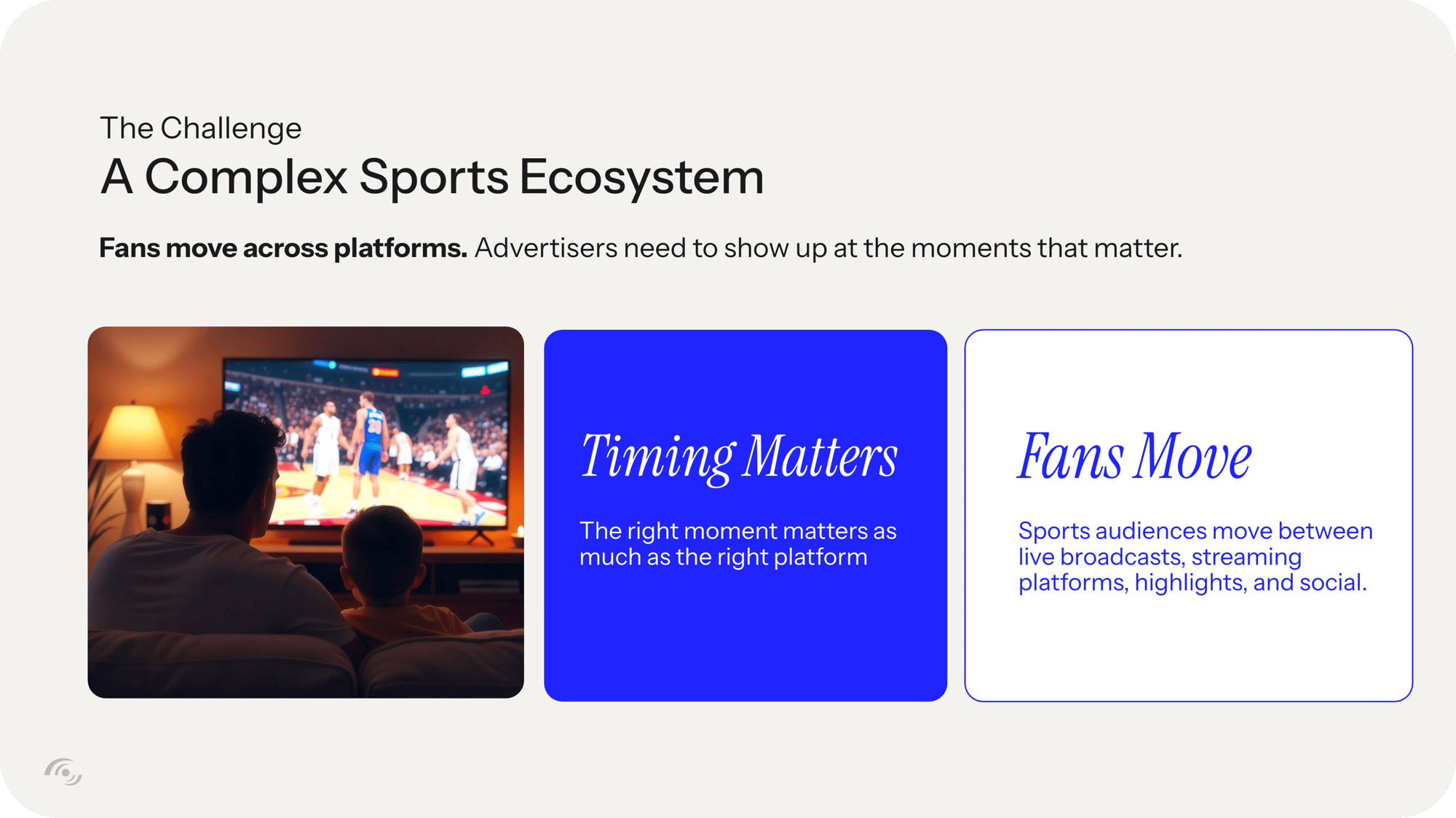
During the webinar, Gray pointed out that sports rights are no longer just about a TV logo placement. Providers are packaging IP across linear, streaming, social, in-venue, and talent-led executions so brands can reach fans in more places and reinforce the sponsorship through commercial media as well.
What's the biggest mistake mid-market brands make in their first CTV campaign?
The biggest mistake is usually approaching CTV like a simple linear TV extension. The better-performing brands treat it as a more addressable, measurable video channel—using tighter targeting, creative designed for action, and more disciplined frequency management.
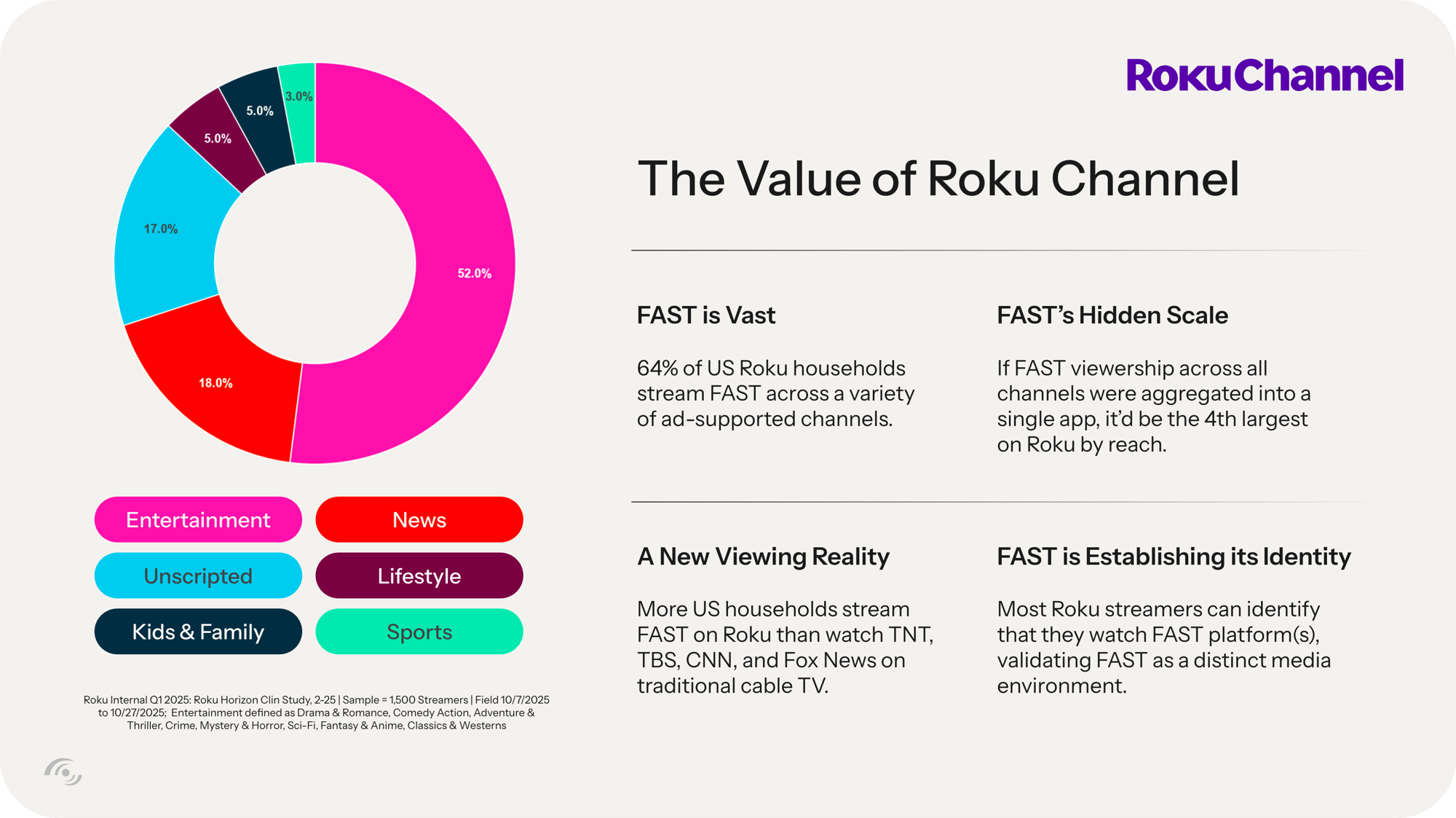
Does MediaRadar's AVOD coverage only applies to desktop apps and not TV sets?
MediaRadar’s AVOD coverage is inclusive of TV sets as well, not just desktop apps.
What is a good approach on explaining to clients on DED in hockey?
DED in hockey is a form of digitally inserted signage—for example, the virtual branding on dasher boards that viewers see during broadcasts. It lets leagues, broadcasters, and advertisers create more flexible, targeted inventory than traditional static arena signage. The value is that it can be updated, customized by market or feed, and integrated into broader cross-platform sponsorship strategies, especially as sports viewing shifts toward streaming and more addressable environments.
Do you actually see different types of advertisers gravitating toward different AVOD platforms—like Prime Video vs. Roku vs. YouTube—or is it mostly the same mix everywhere?
We’re starting to see real platform-level strategy emerge. It’s not the same mix of advertisers everywhere. For example, pharma dominates more traditional AVOD platforms like Hulu and Peacock because they rely on demographic and condition-based targeting. But when you look at Prime Video, you see more telecom and auto brands leaning in, which makes sense given Amazon’s strength in purchase data. And then YouTube sits in a category of its own, blending TV-scale reach with more social-style engagement. So platform selection is becoming much more intentional based on the type of data and audience each one offers.
One of the biggest complaints with viewership of CTV is the same ad running repeatedly within a particular program. How are advertisers not pushing back on this type of over-exposure of their ad?
Advertisers are pushing back, and the market is responding through better frequency management and smarter allocation. Jay specifically noted that early CTV buys often created repeated ad exposure, but platforms and buyers are improving at managing frequency and reducing glut. It is still a challenge, but it is one the ecosystem is actively trying to solve.
Looks like a lot of growth across AVOD—how much of that is net-new budget vs. just dollars shifting out of linear?
It’s both—but increasingly net-new budget is entering the ecosystem. Yes, we’re still seeing dollars move out of linear as cord-cutting accelerates. But the bigger shift is that CTV is now treated as performance media, not just awareness. That unlocks incremental budget from digital channels like paid social and online video CTV isn’t just replacing linear—it’s absorbing budget from across the media mix because it combines TV-scale reach with digital measurement.
How are you seeing brands measure success across platforms when everything—from YouTube to FAST—has different metrics?
Measurement is definitely one of the biggest challenges right now because every platform still has its own way of reporting performance. But instead of waiting for everything to standardize, brands are shifting their mindset. They’re focusing on cross-platform signals like incremental reach, frequency, conversion lift, and how creative performs across environments. What’s really emerging is this idea of a unified view—connecting data points across platforms to understand the full impact of a campaign, rather than relying on any single metric in isolation.
How are agencies helping mid-market brands enter CTV without massive budgets?
Agencies are helping mid-market brands enter CTV by taking advantage of the expanding inventory base, the growth of ad-supported streaming options, and smarter planning tools that reduce waste. As more apps and ad models enter the market, there are more ways to build targeted CTV campaigns without needing top-tier TV budgets.
How should we think about frequency across platforms—especially with fragmentation increasing?
Frequency management has gotten a lot more complex because audiences are constantly moving between platforms—CTV, YouTube, social, live sports, highlights. Without coordination, it’s easy to either overexpose users or miss them entirely. The brands that are doing this well are stepping back and planning holistically, looking at frequency across their entire video mix rather than channel by channel. It really becomes less about managing impressions in one place and more about understanding total exposure across the ecosystem.
What are the biggest creative mistakes brands are making in AVOD right now?
The biggest mistake we see is brands treating CTV like traditional TV. They’ll run the same creative without adapting it for a more interactive, performance-driven environment. Another issue is not tailoring creative for different platforms—what works on YouTube isn’t necessarily what works on FAST or a streaming app. And then there’s often a missed opportunity around actionability. CTV now supports things like QR codes and retargeting, but not every brand is taking advantage of that. The brands that stand out are thinking about creative as something that evolves across the entire video ecosystem, not just one placement.
With so many walled gardens, how realistic is it to actually get a unified view of performance across video everywhere?
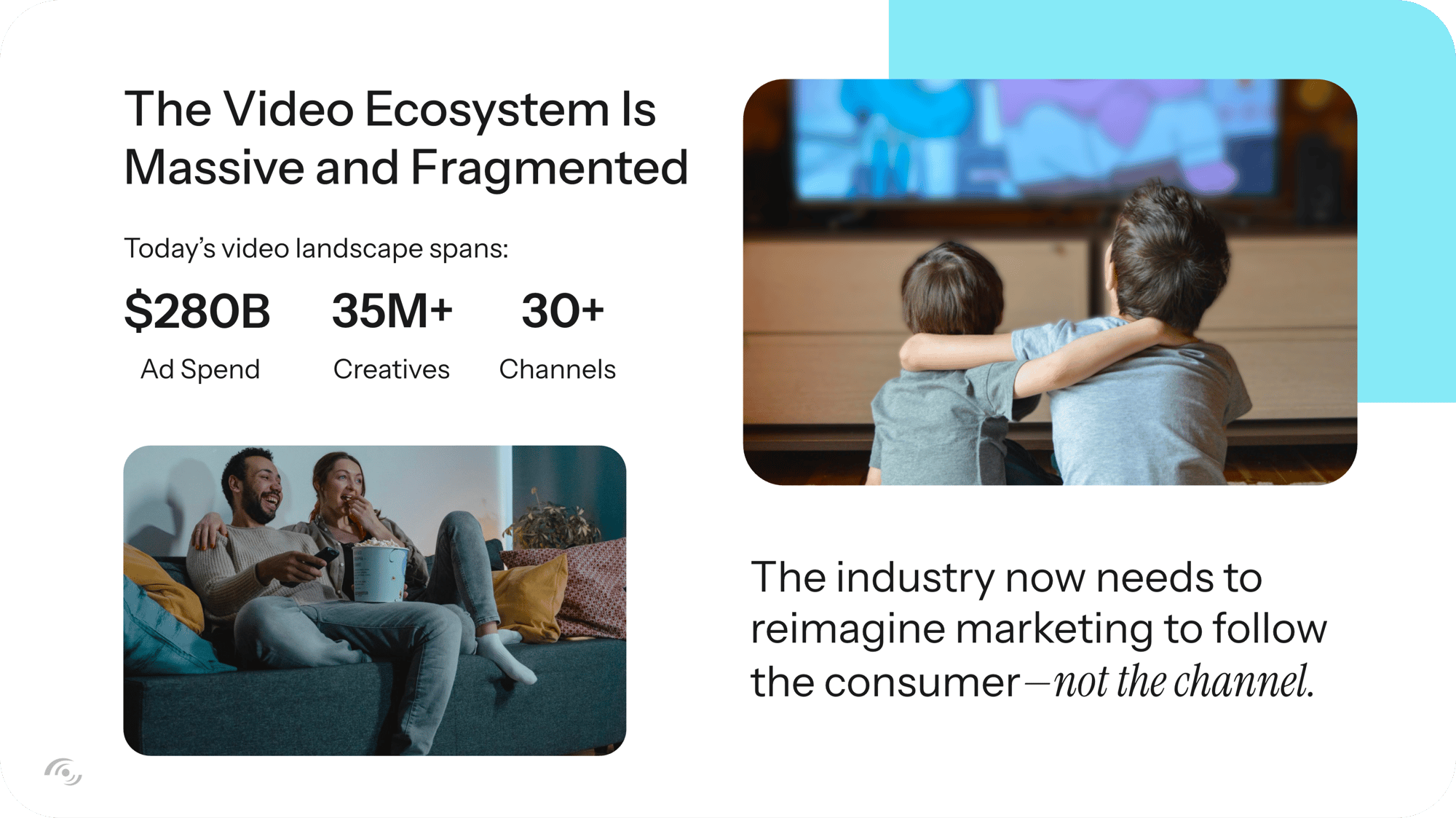
It’s becoming not just realistic, but essential. The video landscape is incredibly fragmented, with dozens of channels and millions of creatives, and brands can’t afford to optimize in silos anymore. What’s making a unified view more achievable is better data coverage, more visibility into creative, and the ability to track where and when ads are running across platforms. The goal isn’t to have a perfect, single metric, it’s to have enough visibility across the ecosystem to make smarter, faster decisions.