
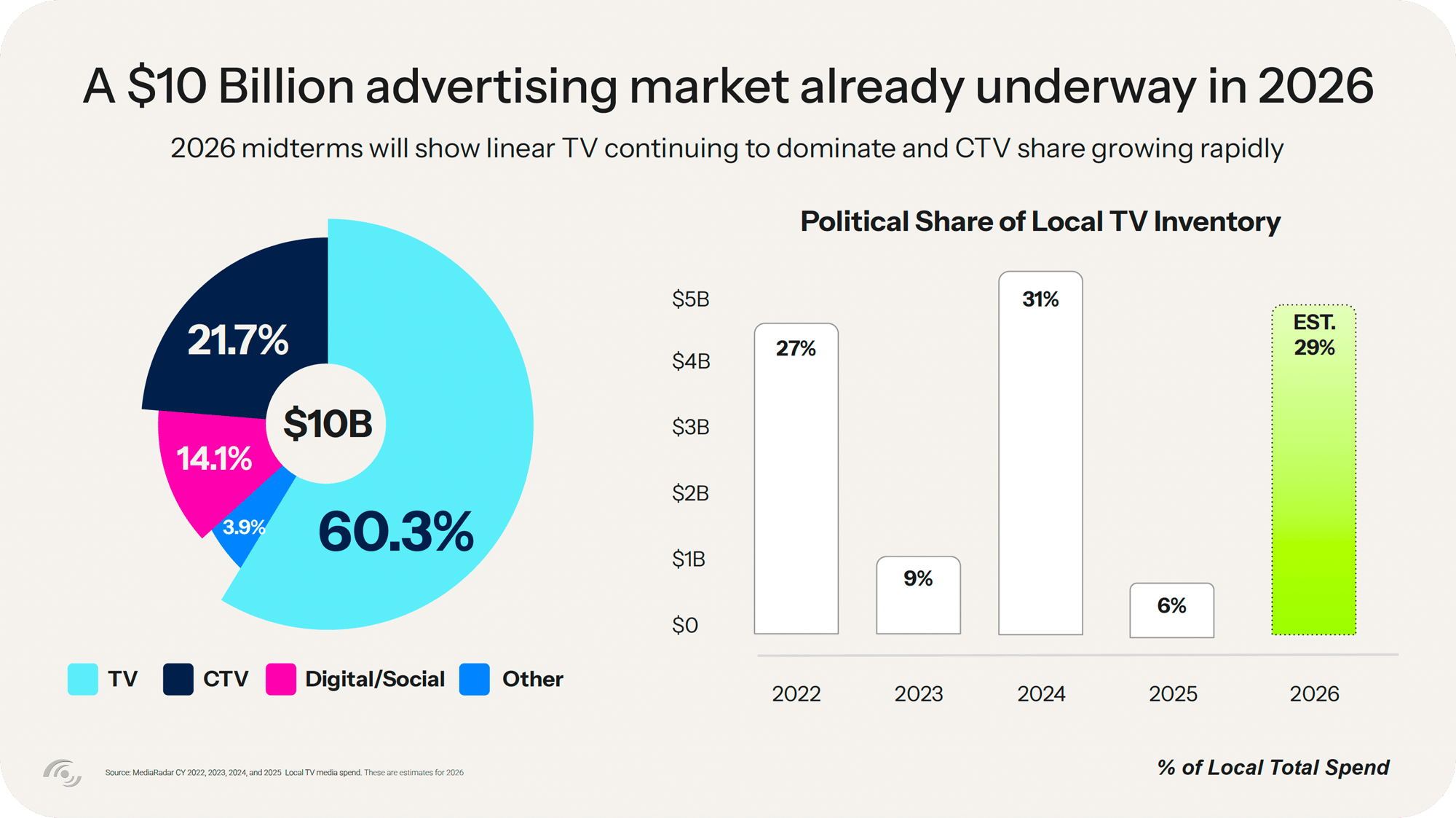
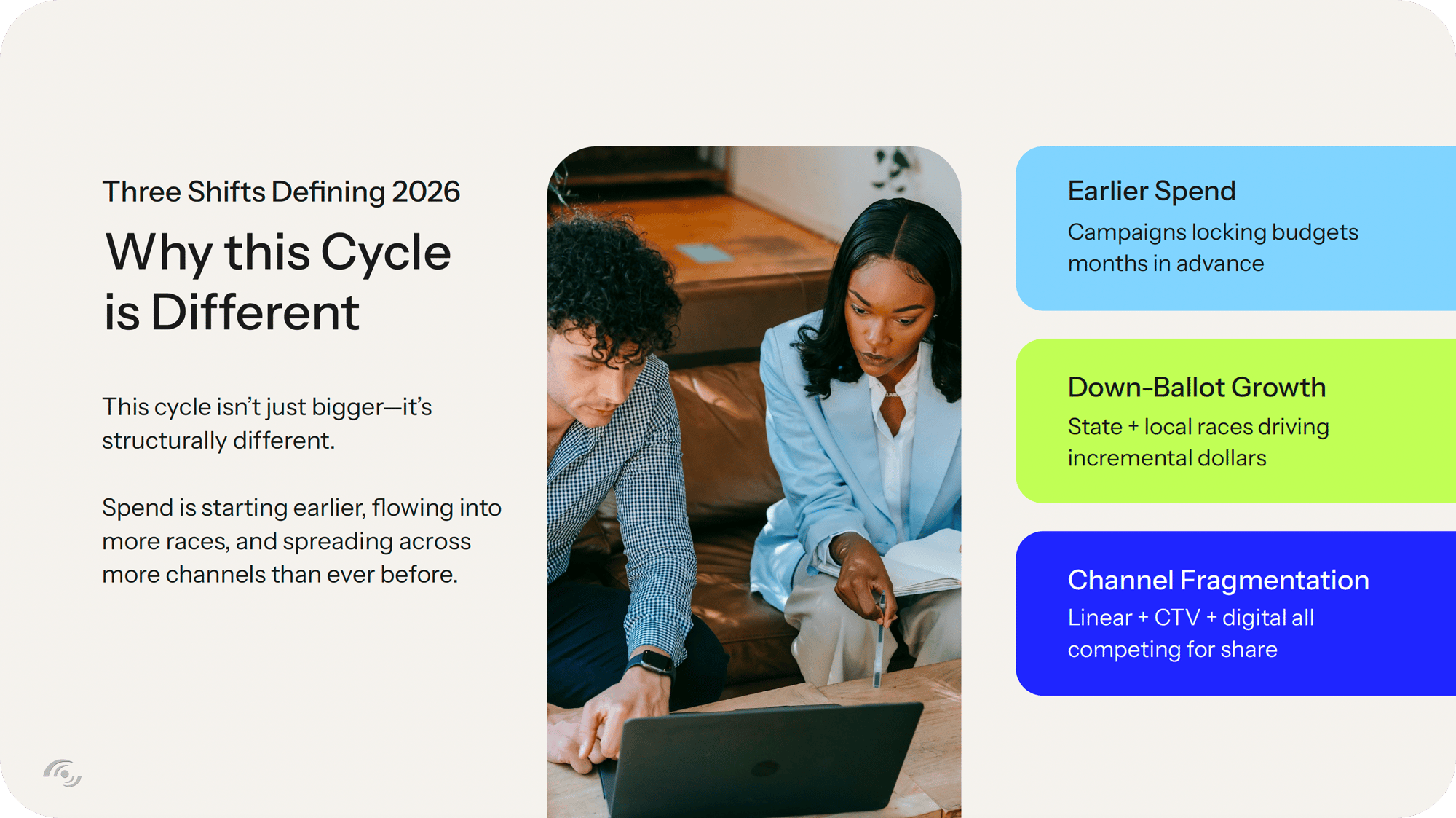
Political advertising is already heating up, and the 2026 midterm cycle is projected to drive more than $10 billion in media spend—nearly double the last midterm cycle. But by the time political dollars appear in publicly available filing registries, much of the opportunity has already moved. Campaigns and buying firms are making strategic budget decisions earlier than ever, driving demand across local TV, radio, CTV, digital, and out-of-home markets. As political spend accelerates, media organizations need earlier visibility into where budgets are shifting, which markets are heating up, and how to price inventory more confidently. Political intelligence is becoming a critical advantage for media sellers looking to win more business and capture a larger share of the biggest midterm spend on record.
ON-DEMAND WEBINAR
State of the Industry: Inside the $10B Political Advertising Opportunity
HOSTED BY
Karisa Schroeder
Director, Product Marketing
Karisa is the Director of Product Marketing at MediaRadar, where she leads go-to-market strategies to launch and scale new products and solutions. With expertise in marketing intelligence, data marketplaces, DaaS, and AI-powered insights, she helps brands and agencies deliver connected customer experiences, focusing on creative, competitive, and sports advertising intelligence to drive measurable growth.
HOSTED BY
Steve Davis
Head of Alliances
Steve Davis, Head of Alliances at MediaRadar, is a media and marketing research executive with an accomplished track record of transforming media businesses from traditional and siloed to digital and integrated.
PRESENTED BY
Mike Muller
Sr. Director, Public and Political
As Sales Director of Political Intelligence at MediaRadar, Mike Muller helps political campaigns and advocacy organizations leverage media intelligence, audience insights, and cross-platform advertising strategies to maximize campaign impact and performance throughout the election cycle.
PRESENTED BY
Chris Sebastian
Sr. Political Analyst
Chris Sebastian is a Senior Data Analyst on MediaRadar’s Political Intelligence team, specializing in political ad tracking and campaign media analysis. With nearly a decade of experience and a passion for elections, data storytelling, and uncovering insights from complex datasets, he helps clients turn political advertising data into actionable strategy and smarter campaign decisions.



Webinar Q&A
What data can you pass along that speaks to CTV as a performance medium?
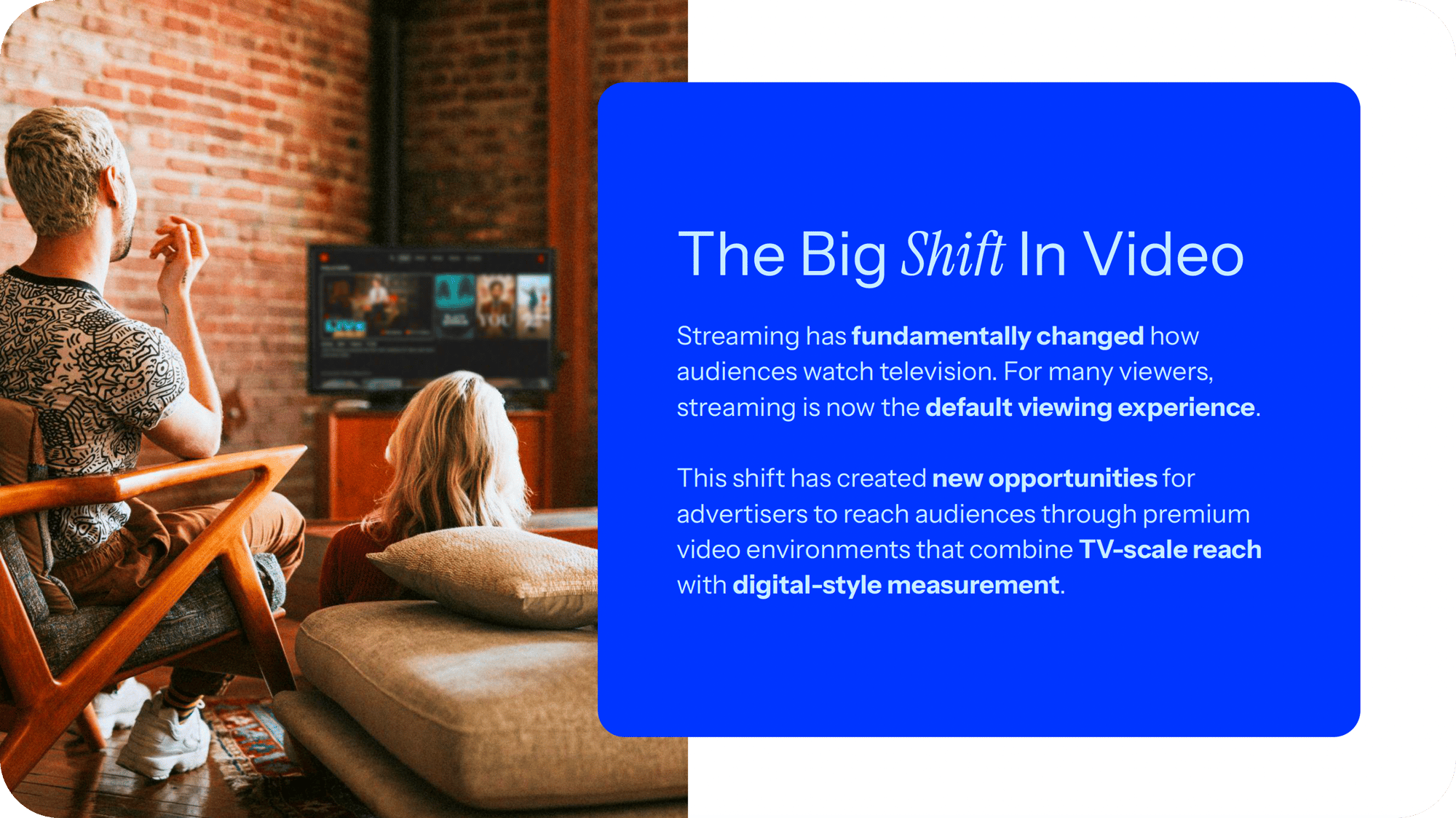
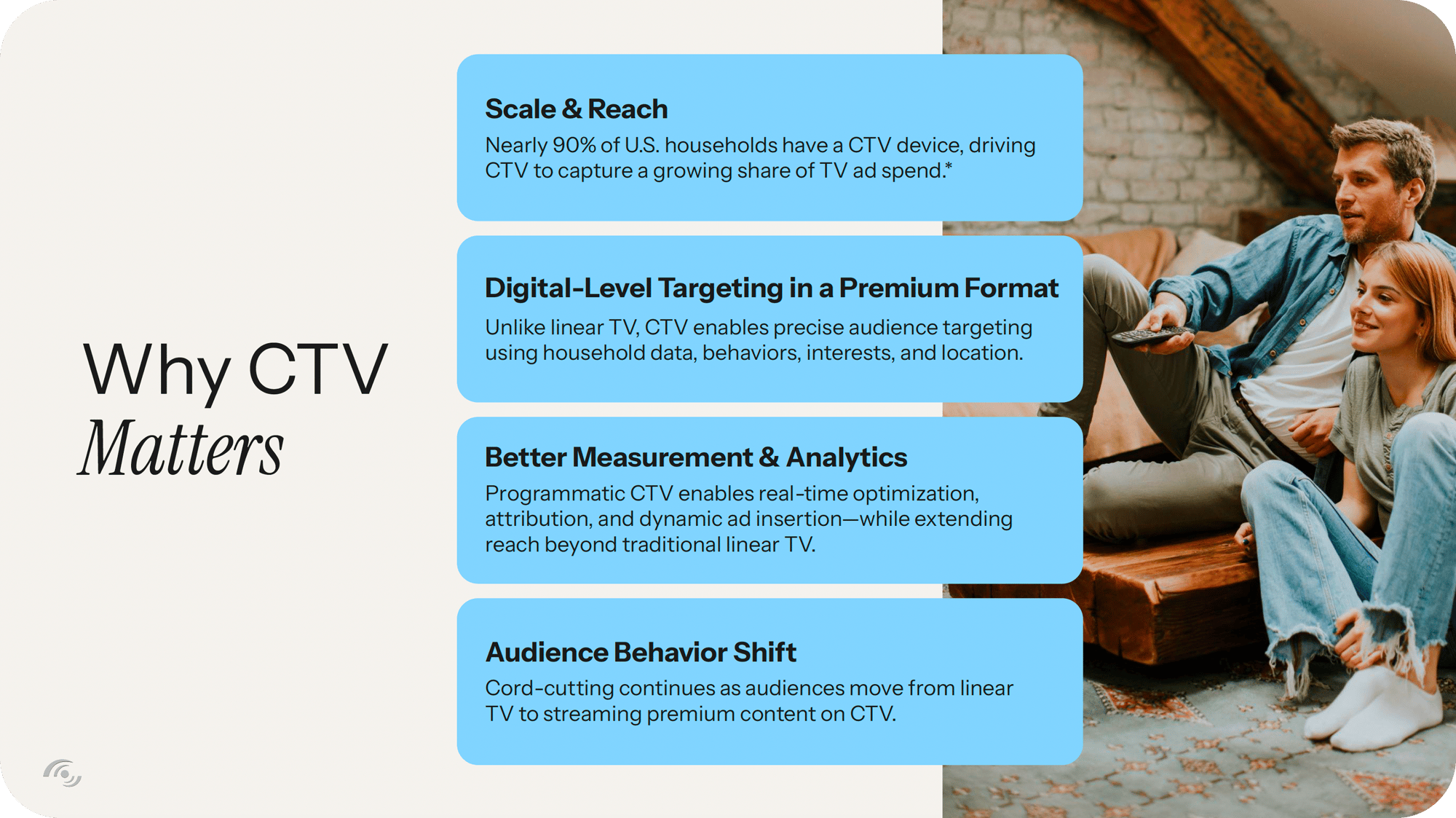
CTV is unskippable with VCR rates of 90-95%+, and political buyers are paying top dollar to prove it. MediaRadar's own analysis confirms campaigns are treating CTV as performance media—not just awareness media—using it for audience precision, frequency control, and measurable outcomes.
On live sports specifically, MediaRadar tracks weekly ad spend and creative across NFL, MLB, and college football on streaming platforms like Amazon Prime, YouTube, and Hulu, and their research shows advertisers are aggressively competing for limited live sports ad inventory as media rights shift from linear to CTV.
CTV still has a frequency cap problem for all advertisers. Is that still a consideration when deciding between CTV and linear budgets?
Frequency works differently across CTV and linear—and for political campaigns, that's actually a feature, not a bug. CTV gives campaigns precise control over how often a voter household sees a message, which you dial up or down depending on the goal: lighter frequency for awareness, heavier for persuasion, and yes, 10-20+ exposures are not uncommon in the final two weeks for GOTV.
Linear doesn't offer that control—you're at the mercy of the network and the market.
What MediaRadar's political intelligence shows is that campaigns are shifting to CTV specifically for frequency control and measurable outcomes—treating it as a performance channel where budget decisions can be optimized in real time, not just set and forgotten like a linear buy.
The frequency "problem" on CTV is largely a management question—and campaigns with the right data and tools are using it as a competitive advantage over linear, not a reason to avoid it.
Digital political agencies aren't required to file spend through the NAB, so how do you track them, and do you have visibility into who's placing CTV and programmatic buys?
This is one of the most honest challenges in political media—and it's worth naming directly. There's no public filing requirement for digital political spend, and CTV buyers in particular—whether through DSPs, OEMs like Samsung, LG, or Vizio, or programmatic platforms—are not required to disclose who's placing those buys. The firms handling linear are often not the same firms handling CTV, with few exceptions, so relationships and networking remain essential on that front.
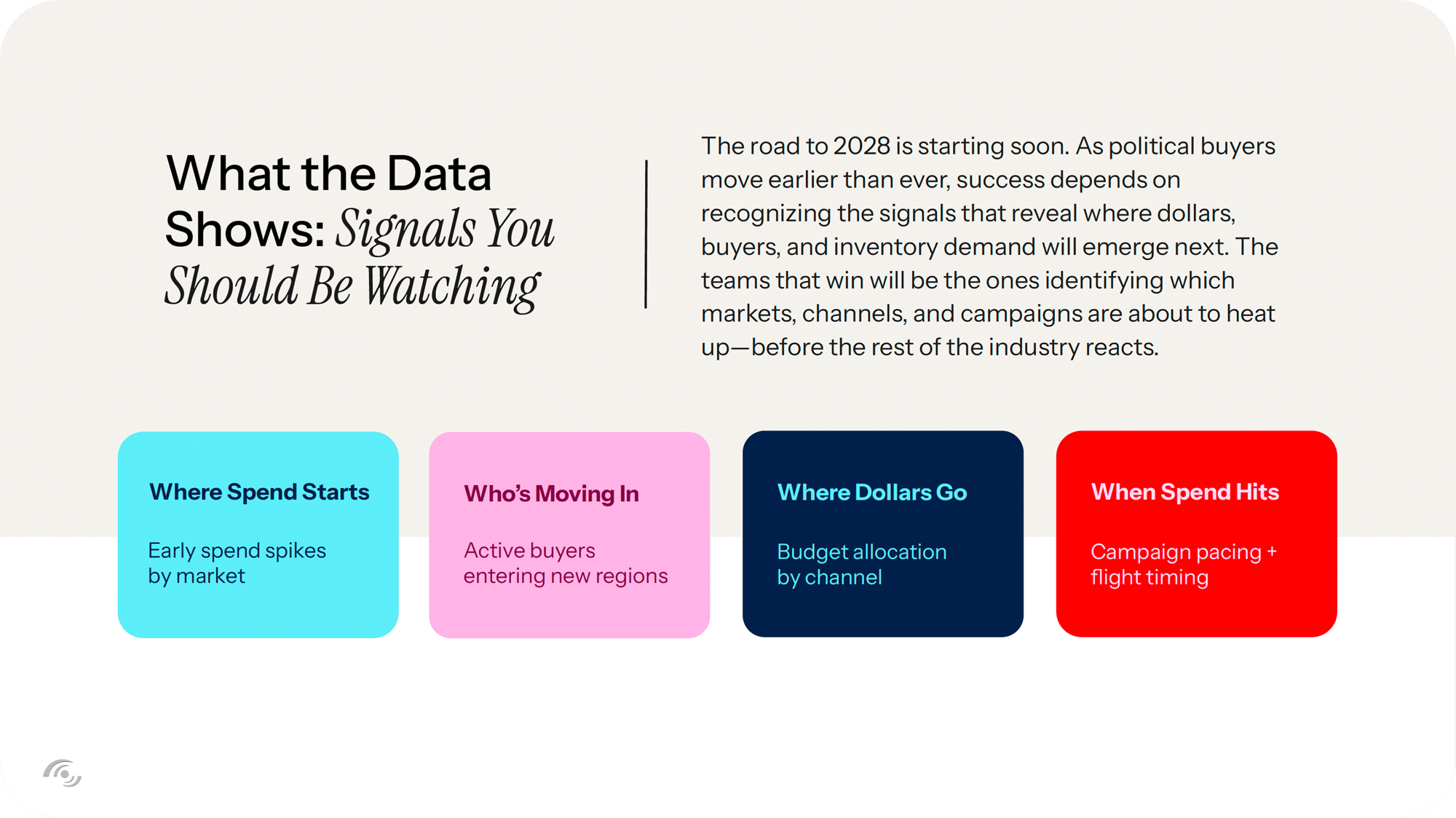
Where MediaRadar helps is getting ahead of the spend before it's obvious to everyone else. Traditional competitive intelligence tells you what's already aired—by the time you see the ads, the money is gone. MediaRadar tracks early ad buys before they air, giving sellers the ability to identify active campaigns before they finalize their media plans and engage buyers ahead of competitors.
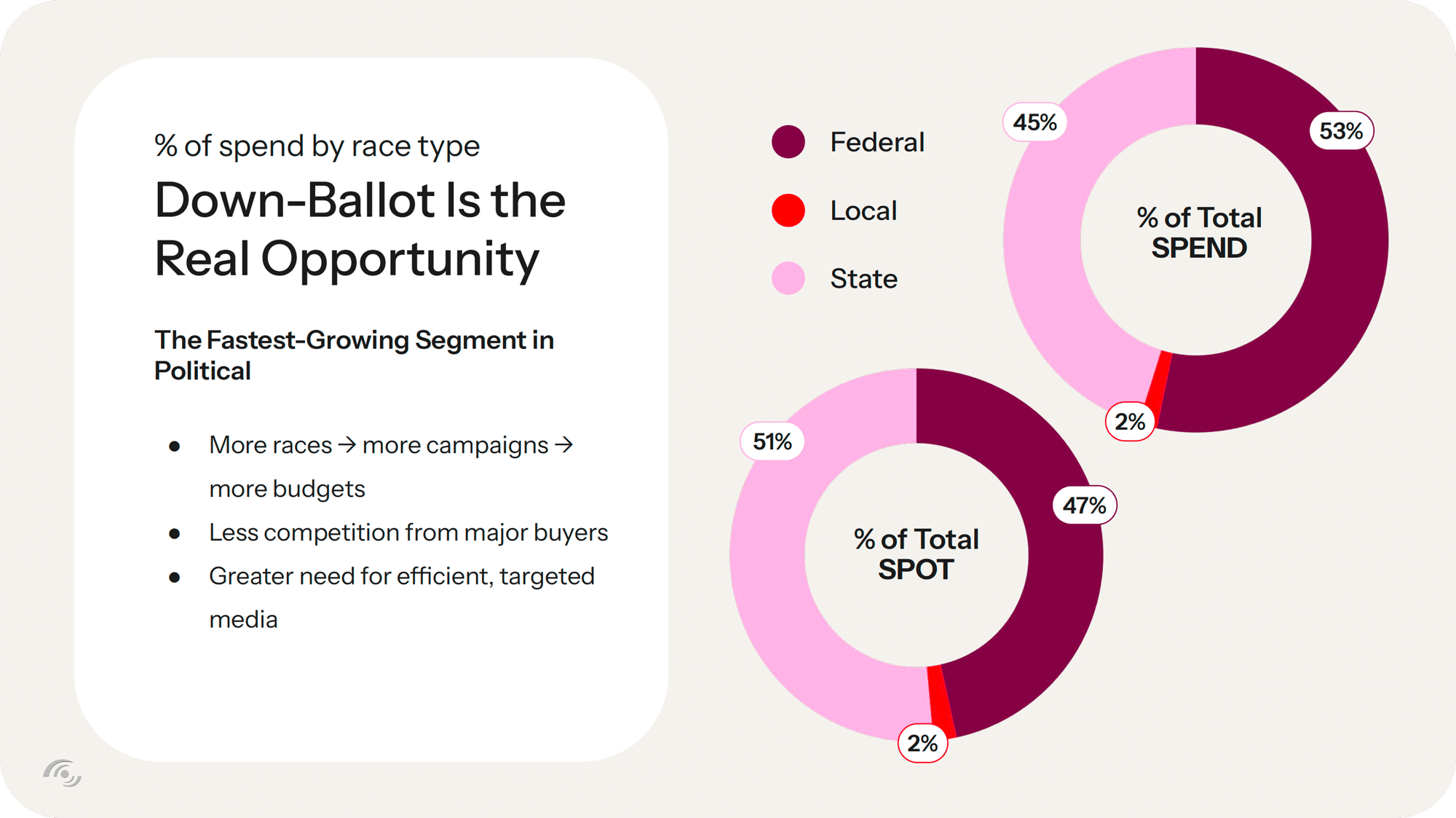
Rather than chasing spend, MediaRadar turns scattered signals into a clear view of where political budgets are forming, shifting, and about to accelerate—including PAC and issue group activity, which account for over half of total political ad spend.
It won't solve the full transparency gap on digital, but it closes it meaningfully—especially for sellers who need to get to the right buyer first.
Thoughts on how redistricting should be taken into consideration?
Until maps are drawn and confirmed, there can be a limit to how much you are able to plan. Once they are, redistricting becomes primarily a targeting and messaging challenge—each redrawn district will reflect a specific demographic and partisan composition, which should directly shape creative, placements, and spend allocation.
MediaRadar tracks spend at the DMA level across more than 35 markets projected to see $50M+ in political investment this cycle, which means as new district maps are finalized, sellers and campaigns can quickly identify where budgets are concentrating and move before inventory tightens.
The defining theme of 2026 is timing plus data visibility—and redistricting only raises the stakes on both.
Outside of TV what platforms do you see as the next area of spend for candidates - digital, radio, podcasts, etc
CTV, CTV, CTV. The precision targeting and scale it offers is unmatched. But beyond that, digital audio has grown cycle over cycle and continues to earn its place in political media plans. The caveat is scale: it works best for statewide races or mayoral campaigns in large DMAs, where you can actually reach enough of the right voters to move the needle. Smaller down-ballot races will struggle to justify the investment.
Can you define your methodology to estimate CTV spending? Do you think there will come a time that CTV vendors will share political buys like they do on Broadcast TV?
On methodology: CTV is inherently fragmented, which is exactly the problem MediaRadar has been working to solve. MediaRadar tracks spend, occurrences, and creative metadata directly across streaming platforms—covering originals, licensed content, and live sports—rather than relying solely on estimated or modeled data. CTV coverage spans FAST channels, streaming libraries, and live sports across major platforms, with vMVPD and OEM inventory noted as coming soon—which speaks directly to the transparency gap around glass companies like Samsung, LG, and Vizio.
That OEM gap is real and unlikely to close on its own. Those platforms have no legal obligation to disclose buy-level data, and there's no regulatory framework pushing them toward it. If CTV political buys were ever mandated to be filed the way broadcast buys are, it would fundamentally reshape how political advertising is bought, measured, and competed for—but that's a policy question, not an industry trend.
In the meantime, MediaRadar's continued expansion into previously opaque CTV environments is narrowing that blind spot—giving political advertisers more visibility into where dollars are landing across the streaming landscape than has ever been available before.
With all the data highlighting the effectiveness of Radio, why is it only garnering an average of 3%?
Simply put: scale and targeting. Terrestrial radio reaches a narrower and older audience, and campaigns prioritizing voter precision and measurable outcomes will always follow the data—which increasingly points elsewhere.
MediaRadar notes that radio operators can be a competitive alternative when TV prices spike, making it a situational buy rather than a strategic anchor. For most campaigns, it's a supplemental line item at best—useful in specific markets or for specific demographics, but not where incremental dollars are going as CTV and digital audio continue to grow.
How can digital publishers outside the CTV space capture political ad spend, given the industry's heavy bias toward localized linear and connected TV formats?
Pre-roll, OLV, and display are still important parts of a balanced omni-channel political buy—the key for publishers is making the case with audience data, not just inventory. Lead with who your audience is: daily visitors, demographics, and local market coverage. Local news publishers in particular have a strong case to make, as campaigns are trying to reach specific voters in specific districts.
Recommendations for print advertising?
For local newspapers in major markets with competitive races, lock in full-page or above-the-fold placements leading into Election Day. That premium real estate goes fast once campaigns are in full sprint.