
Get Ahead of 2026: MediaRadar’s Advertising Forecast dives into what’s next for advertisers as MediaRadar’s experts unpack bold, data-driven predictions across digital, streaming, and retail media. Hosted by Karisa Schroeder, MediaRadar’s Director of Product Marketing, the session features insights from Matt Krepsik, CEO of MediaRadar, and Caroline McCrory as they explore how economic forces, regulatory shifts, and emerging players will reshape how and where ad dollars are spent. Attendees walk away with a clear view of the trends defining 2026—and how to stay ahead of them.
ON-DEMAND WEBINAR
State of the Industry: 2026 Advertising Predictions
HOSTED BY
Karisa Schroeder
Director, Product Marketing
Karisa is the Director of Product Marketing at MediaRadar, where she leads go-to-market strategies to launch and scale new products and solutions. With expertise in marketing intelligence, data marketplaces, DaaS, and AI-powered insights, she helps brands and agencies deliver connected customer experiences, focusing on creative, competitive, and sports advertising intelligence to drive measurable growth.
PRESENTED BY
Matt Krepsik
CEO, MediaRadar
Matt is an experienced media executive with a demonstrated history of working across the media and information technology industries. Skilled in big data, artificial intelligence, technology, marketing, and market research, he is a seasoned business development professional with global leadership experience.
PRESENTED BY
Caroline McCrory
CCO, MediaRadar
As Chief Commercial Officer, Caroline leads our Sales, Client Engagement, Marketing, and Revenue Operations teams. Caroline brings an exceptional record of accelerating revenue growth and scaling commercial teams within the data and information services industry, including notable tenures at S&P Global Market Intelligence, Green Street, and SNL Financial.


Webinar Q&A
Where do you see micro-influencers fitting into the influencer/celebrity mix?
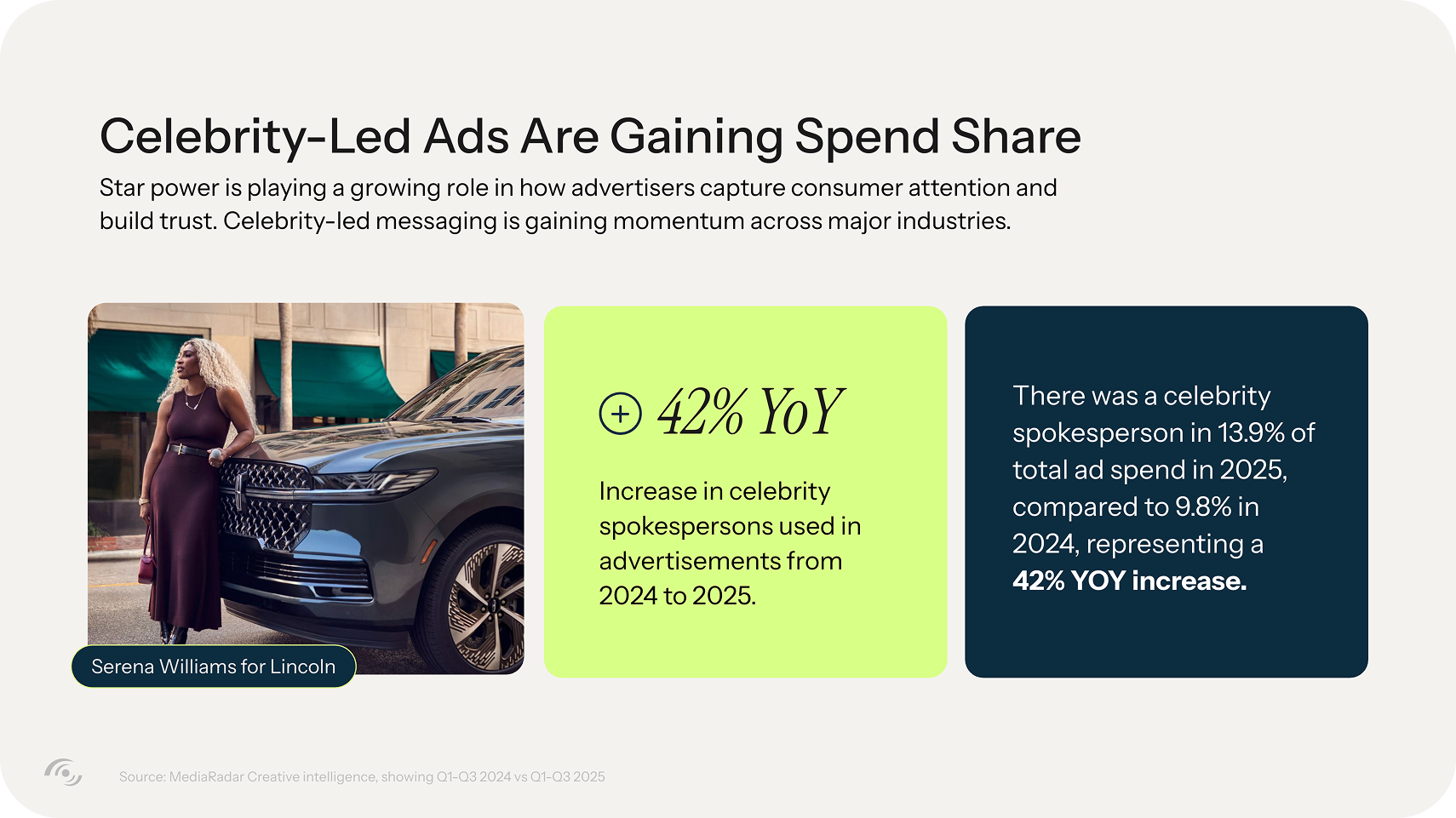
Micro-influencers are the authenticity layer in the mix. Celebrities are great for fast, broad attention, but micro-influencers win when brands need “real people” credibility and relevance in specific communities—especially as media shifts toward more personalized, narrowcast distribution.
Largely B2C, I understand…. any comments/ insights about B2B as it relates to tariffs and political climate?
For B2B, tariffs and political volatility usually translate into more conservative budgeting and more scrutiny on ROI, plus messaging that emphasizes resilience (supply chain stability, lead times, predictable pricing). Also, political spend can create inventory pressure and pricing inflation, so B2B advertisers benefit from staying flexible across channels and timing.
Best replica of UGC for B2B advertising… could business leaders/experts fit the bill?
Yes—expert-led and leader-led content is the closest B2B equivalent of UGC because it delivers the same “human, credible, native-to-the-platform” feel. Think founder/executive POV, practitioner explainers, and customer voices—produced simply, with honesty and specificity.
Why is Financial Services expected to have such high growth? Any forecast on Auto? And Food & Beverage?
Financial Services is positioned for strong growth because it competes aggressively for high-LTV customers and can speak to both sides of the “K-shaped” economy (premium and value). In the deck’s latest view, Finance is a leading growth category (+20%, $18.1B). Auto and Food & Beverage are showing signals of stronger value messaging and are participating in the broader move toward CTV/OTT spend growth.
Political spending will be more spread out… will there still be key states with higher spend?
There will definitely still be key states with higher spend – many of the states we associate with high spend and competitive races will remain on-top of the ranking. Michigan, in particular, is likely in for another extremely expensive year.
When we say that we expect spending to be more “spread out”, what we really mean is that many of those smaller markets that were often overlooked by political advertisers have seen more and more political spending in recent cycles. There are lots of reasons for this: better intelligence on both the buy and sell side, changing political geographies making previously uncompetitive seats competitive, and more aggressive spending strategies in lower level races from outside groups, just to name a few.
You refer to streaming as OTT, but here you’re saying CTV. Are they the same?
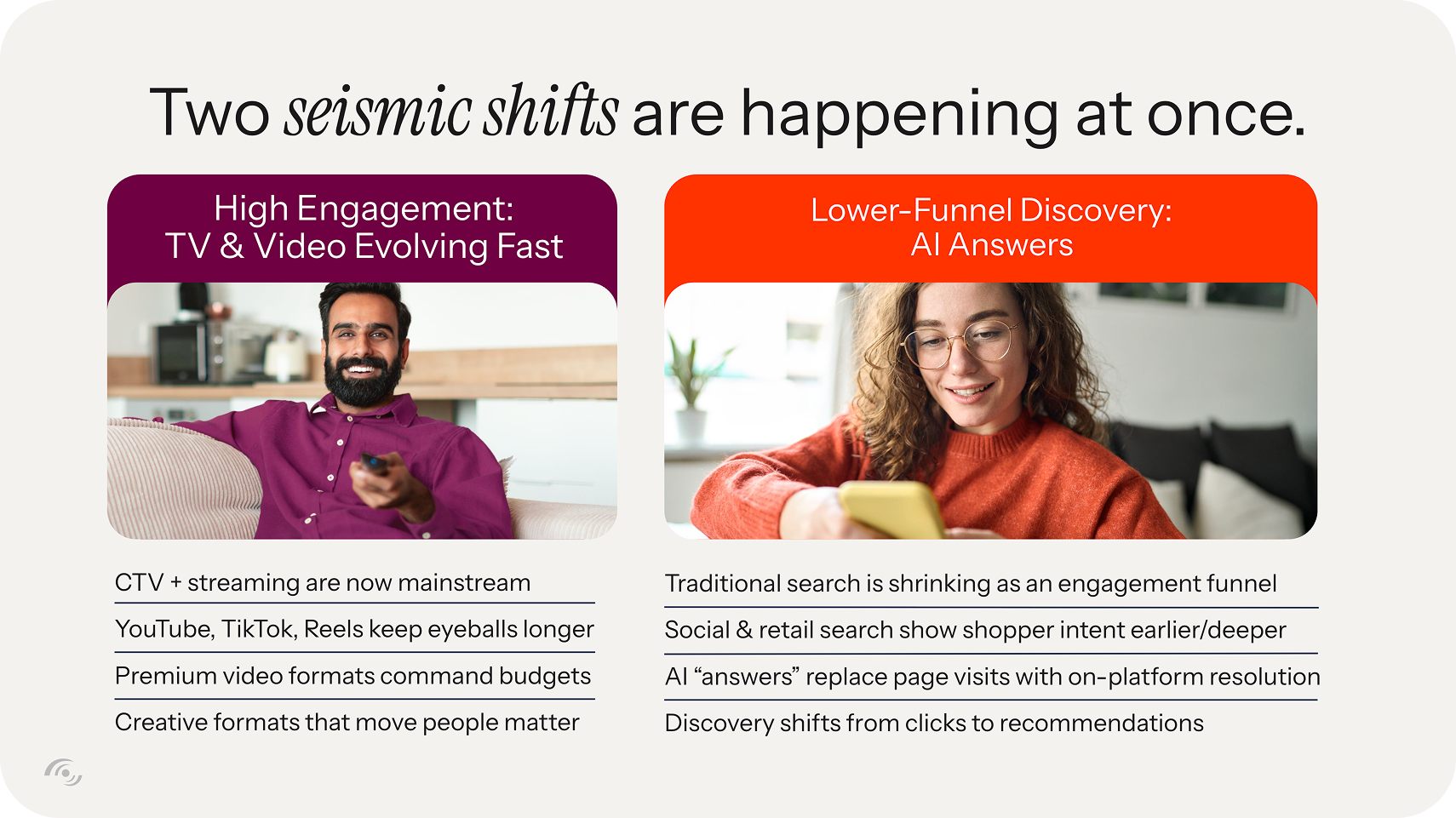
They’re related, but not identical. OTT is the streaming delivery method, while CTV is streaming viewed on a connected TV device. In practice, many conversations bundle them together (as the deck does with “CTV/OTT”) because buying and measurement overlap heavily.
What do you think narrowcast will look like for local media companies with local newscasts and reporting?
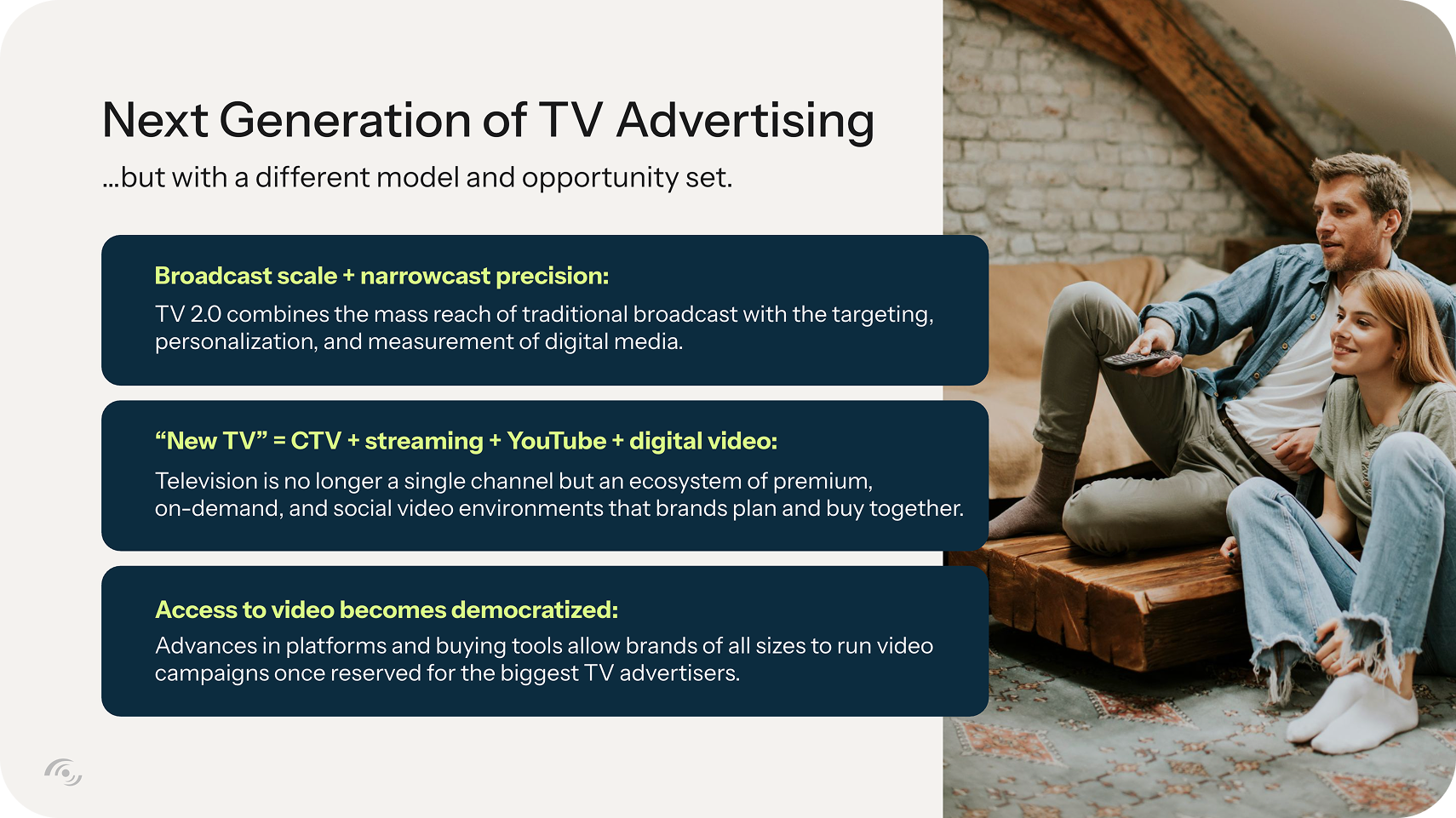
Local narrowcast likely means local news becoming multi-endpoint video: streaming, social video, connected TV apps, and more personalized distribution. The opportunity is to package local reporting in more creator-native formats while keeping the trust advantage local news already has.
COMING MARCH 19th
State of the Industry: Video Everywhere—Winning in the New Era of CTV
CTV is rapidly converging with linear, digital video, and social, and this webinar will break down the latest ad spend, category momentum, and go-to-market shifts.